REC! / Previous editions
European Creativity Biennial 2021
The first edition of the European Creativity Biennial, in Strasbourg, focusing on urban spaces, gastronomy and the circular economy.
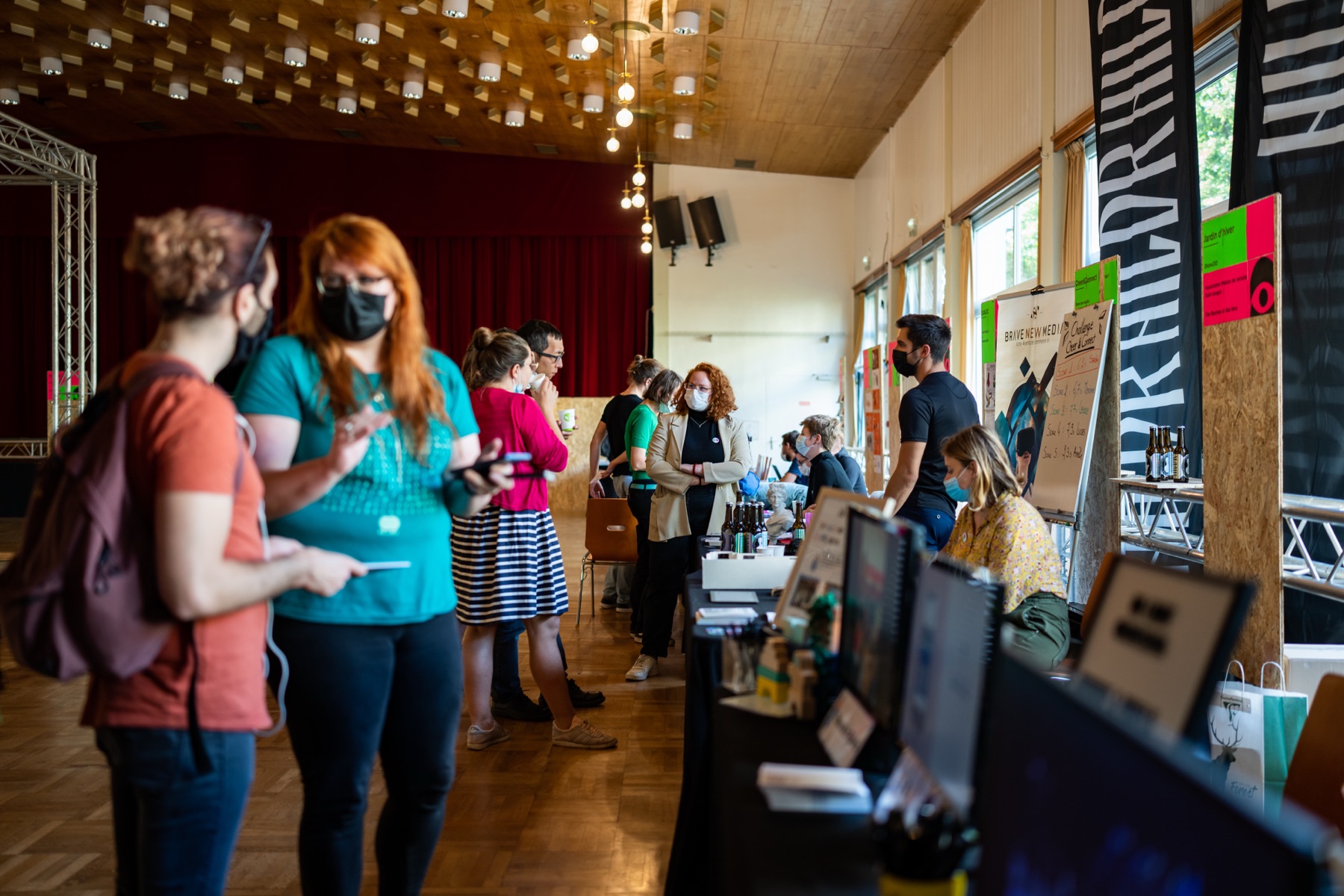
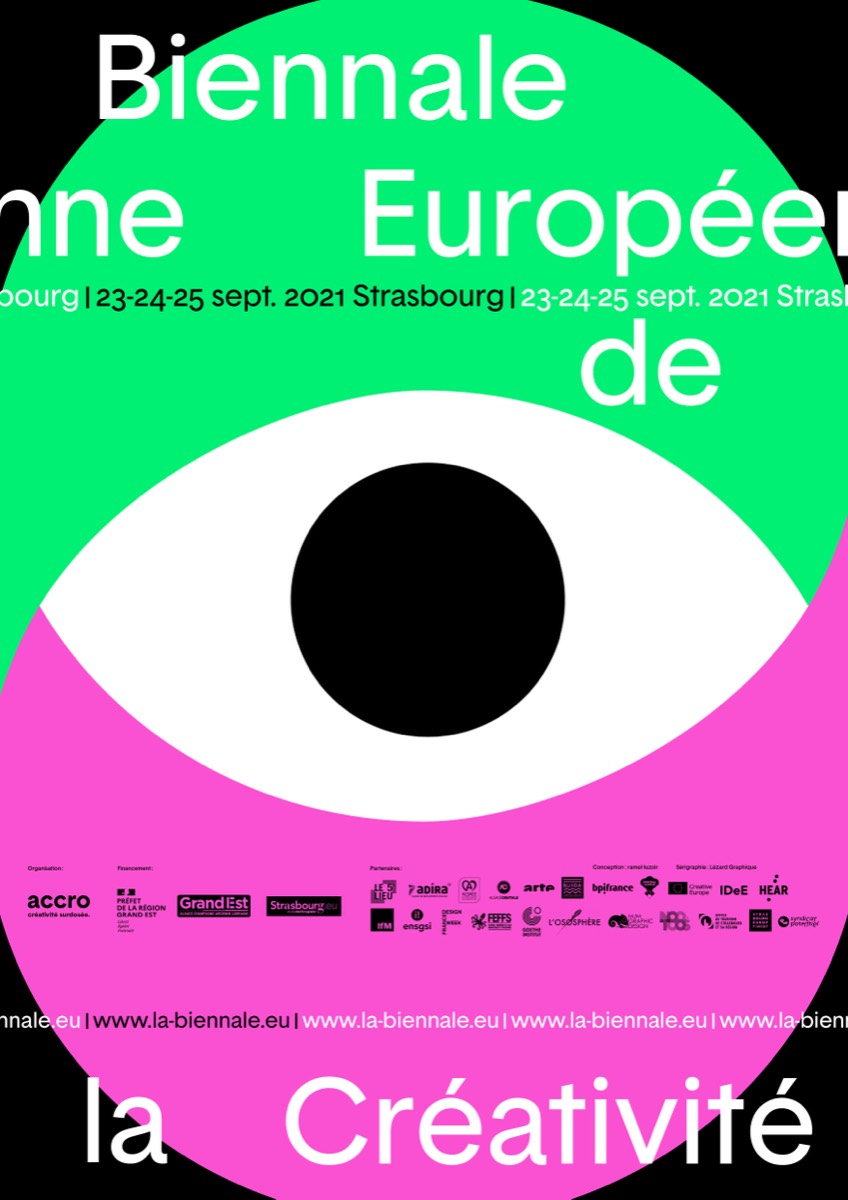
From 23 to 25 September 2021, the first European Creativity Biennial took place in eleven venues across Strasbourg. Three days, fifty-three sessions, four hundred and sixty-four participants. An event designed over three years with players from the cultural and creative industries, business support hubs and higher education institutions in Grand Est.
The ambition
The Biennial responded to an observation shared by accro and its partners: the region is home to creators, studios, workshops and laboratories whose skills are of direct interest to businesses, local authorities and residents, two worlds that rub shoulders without really meeting. The first edition set out to make that meeting happen and demonstrate its value, through three functions: a showcase of solutions, a space for reflection and a laboratory for experimentation.
In her editorial, Pia Imbs, President of the Eurometropolis of Strasbourg, placed the event within the region’s economic trajectory, in connection with the Pact for a Sustainable Local Economy. Tamim Daoudi, then President of accro, announced a moving event, intended to reveal the creative dynamics of other cities in Grand Est.
An event spread across the city
The approach was to spread out. Rather than a single site, the programme unfolded in the venues that bring creation to life in Strasbourg: the 5e Lieu, NooToos, the Centre culturel Marcel Marceau, the MJM Graphic Design school, the Vaisseau, the HEAR, the Syndicat Potentiel, the CCI on place Gutenberg, the Maison Citoyenne, the Shadok and the Quartier Laiterie, as far as a session on the Kehl side, at the end of the Mimram footbridge. By setting up in its partners’ premises, the Biennial made visible the network that already structures Strasbourg’s creative ecosystem.
The three themes
Urban spaces
The programme explored the links between creativity and city-making: the place of art in public space, the transformation of how a neighbourhood is imagined. Round tables at the HEAR (L’Industrie Magnifique, CTS, City of Strasbourg) and with SPL Deux-Rives; the Jardin des sciences Landing Game (Interreg Clim’Ability Design project); the sound saga In the field by Gaëtan Gromer (Les Ensembles 2.2).
Gastronomy
How creation transforms what we eat, and what design brings to the region’s food expertise. A talk and a culinary design workshop with Sonia Verguet, a round table on sustainable catering, work by the IDeE association, and a sold-out “Video games and cooking” session at the Shadok.
Circular economy
Reuse took up the largest share of the public programme: upcycling workshops (Lélli Studio, RESAP Paris, Creative Vintage), round tables on waste recovery, cradle-to-cradle (Roses&Aléas) and recycled plastic (HoliMaker), IDeE workshops on beech wood and plastics. A fourth, cross-cutting strand was devoted to creativity itself.
Highlights
- Expérimentez demain! (Experiment with tomorrow!) More than 500 m² of some thirty prototypes from 24 project leads (health, disability, food, inclusion). The best-attended session.
- Design and industry in the Anthropocene: keynote by Gwenaëlle Bertrand and Maxime Favard at the HEAR.
- Design your video game in two days: a hackathon with Alsace Digitale, five games presented.
- To create is to destroy: closing keynote by Dominique Sciamma.
- The exhibitions: “Pièces à vivre”, “Dark Matter”, and projects by MJM and LISAA Strasbourg.
Results
53 sessions (22 round tables, 12 keynotes, 11 workshops, 5 exhibitions, 3 experiments), 94 speakers, 464 participants over three days. The audience confirmed the event’s role as a bridge: 47% CCI professionals, 29% general public, 18% other sectors, 12% local authorities. One indicator shaped what came next: 48% of visitors had not heard of accro before the Biennial. Satisfaction: 7.5/10 for the organisation, 8.6 for the content of the talks; a Net Promoter Score of 53%.
Funding & partners
Funding: the French State, the Grand Est Region, the City and Eurometropolis of Strasbourg. Venues and partners: 5e Lieu, HEAR, MJM, LISAA, Syndicat Potentiel, CCI Alsace Eurométropole, Le Vaisseau, Maison Citoyenne, Centre culturel Marcel Marceau, NooToos, Shadok, Alsace Digitale, L’Ososphère, IDeE, Jardin des sciences of the University of Strasbourg. Photo credits: Bartosch Salmanski.