What we do
Agoratrium: CCI regional hub
A regional hub for the cultural and creative industries, led by a consortium and supported by France 2030.
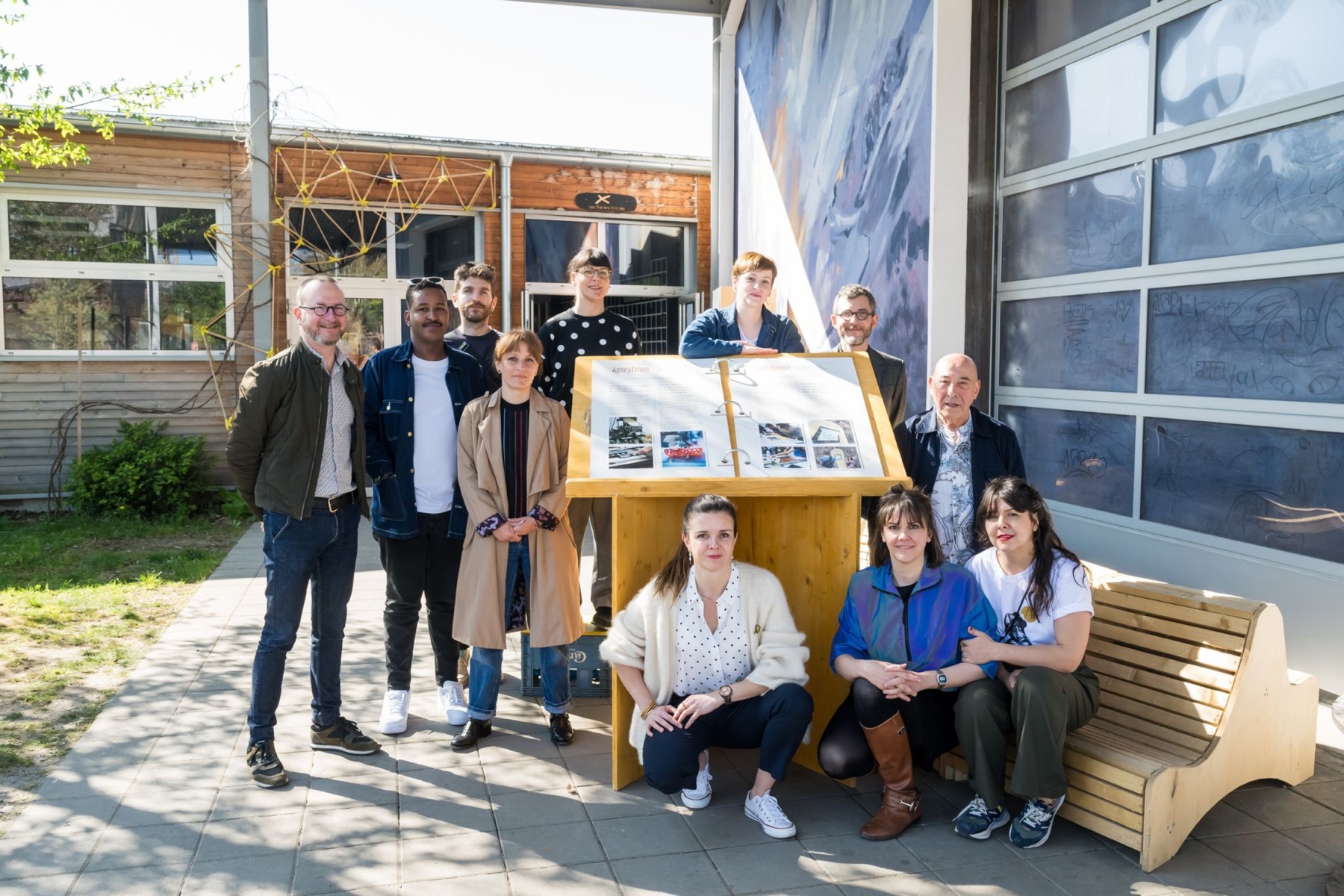
Agoratrium is a project for a regional hub of the cultural and creative industries. In the COOP district, it aims to bring together a heritage centre devoted to Gutenberg, a training school, a creativity and research laboratory and a shared micro-factory.
The project rests on a consortium of four founding organisations: accro, the Espace européen Gutenberg, Fabéon and the Ateliers Éclairés. It is supported by the Eurometropolis of Strasbourg, the City of Strasbourg, the University of Strasbourg, SERS and several regional partners.
Two projects brought together
For several years, the City and the Eurometropolis had been supporting two separate initiatives. The Espace européen Gutenberg was developing a heritage centre devoted to the history and techniques of printing. Fabéon was developing a Print Hub focused on digital printing, additive manufacturing and training for new professions. An association and a company: one subject, two ways in.
Agoratrium unites them in a single venue. It adds what each of them lacked: research, creativity, incubation and sector development.
A process under way since 2023
The “Regional hubs for the cultural and creative industries” programme is part of France 2030 and is run by the Banque des Territoires. It does not fund stand-alone cultural facilities. It supports place-based projects able to structure a sector, pool resources and generate economic momentum.
The Strasbourg consortium applied to the call for expressions of interest on 31 March 2023. It was selected the following spring, out of 138 applications. This selection unlocked funding for one year of project engineering.
From February to November 2024, six actions were carried out: territorial diagnosis, shared vision, design of the spaces, environmental commitment, governance and communication. accro led the shared vision and facilitated the four collaborative workshops that produced the project’s founding manifesto.
A building designed for production
The project changed scale between the two phases. Initially planned as a refurbishment on rue Saglio, it was relocated to the Port du Rhin as an 8,700 m² new build. Its location in Deux-Rives gives it regional visibility, a cross-border dimension and roots in a district already committed to the ecological transition. SERS will act as project owner.
The programme was designed around the real use of the workshops: floors that can bear heavy machinery, goods lifts sized for printing equipment, circulation wide enough for pallets. It will house five hubs:
- A professional mutual support network for players in the sector, run by Agoratrium.
- The Centre Gutenberg, coordinated by the Espace européen Gutenberg: permanent exhibition, working machines, typography, lithography, screen printing, engraving and bookbinding workshops.
- A creativity and research laboratory led by accro.
- A training hub run by Fabéon, from initial training to continuing education.
- A print lab and a micro-factory, open to prototyping, small runs and craft production.
An auditorium, flexible rooms, a showroom and offices will complete the whole.
accro’s role
Each member of the consortium has committed to a defined scope. accro has committed to the economic development of the cultural and creative industries as a whole. The consortium is strong in printing, graphic arts and crafts; design, video games, digital arts and audiovisual have no representation of their own within it. accro speaks for them.
accro will coordinate the creativity and research laboratory, which will bring together a CCI pre-incubator, an incubator, residencies and a research unit run with the University of Strasbourg. It is also involved, with the three other founding organisations, in shaping the hub’s future governance.
Cultural legitimacy, a fragile sector
Strasbourg is the cradle of European printing and was UNESCO World Book Capital in 2024. The city holds an exceptional living heritage in the graphic sector: the Bibliothèque nationale et universitaire, the Cabinet des estampes et des dessins, the Musée Tomi Ungerer, the Fête des imprimeurs. Agoratrium gives this heritage a contemporary economic expression.
The Eurometropolis has 3,200 establishments in the cultural and creative industries and 7,600 jobs. Regionally, Grand Est has more than 36,000 people working in the graphic arts industry and ranks as the third French region for training in this sector.
The sector remains fragile: nine establishments out of ten have no employees; in printing and the graphic arts, salaried employment fell by 28% in the Eurometropolis between 2012 and 2022; nearly 40% of self-employed craftspeople are over 55 and some skills are no longer taught. Some of the young people trained here leave to work in Germany. Agoratrium responds by bringing machines, skills, training, research and businesses together in a single venue.
Where the project stands
The application to the call for projects was submitted on 15 October 2025. It was presented orally to the Caisse des dépôts et consignations on 10 March 2026, with three representatives of the consortium. It is currently under review. Work continues in the meantime: preparing the lead organisation, looking for interim solutions in the district, presenting the project to the European partners welcomed in Strasbourg in June 2026.
Follow the project
Agoratrium is being built collectively. Players in printing, graphic arts, crafts and, more broadly, the cultural and creative industries are welcome to get in touch with accro. Write to us, Become a member of accro.
The consortium: Eurometropolis of Strasbourg, City of Strasbourg, accro, Espace européen Gutenberg, Fabéon, Les Ateliers Éclairés, SERS, University of Strasbourg, SEMIA / Quest for Change, La French Tech Est, Frémaa.