In their footsteps: Tamim Daoudi
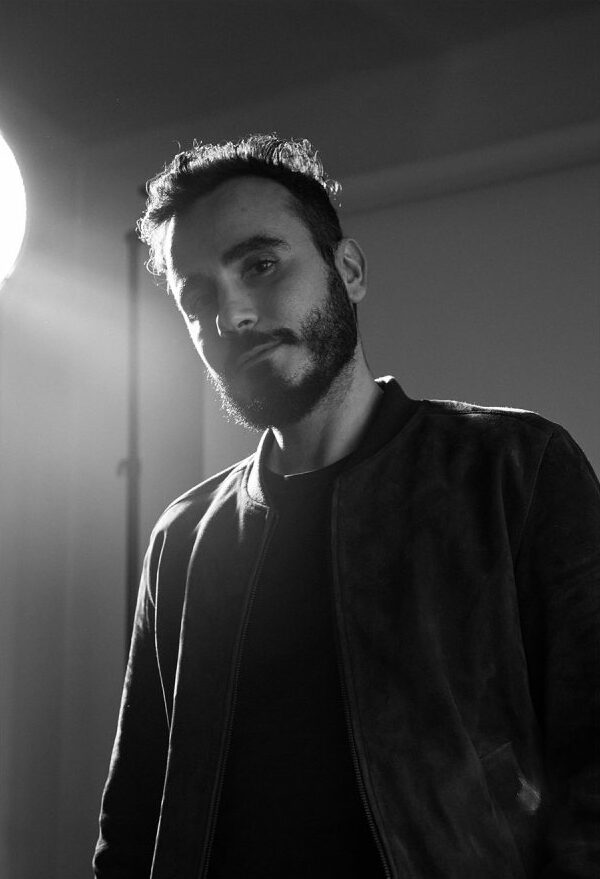
Designer, four-time Tango&Scan winner and president of the accro association for four years, Tamim Daoudi talks to us about his career.
8 January 2024
Introduce yourself and your project:
My name is Tamim Daoudi, and I have been working in product and industrial design for 15 years. My path has been quite long: first a MANAA (foundation year in applied arts), a BTS in design, a degree in applied arts at Paris 1, a DNSEAP at the Arts Déco, then a short spell in automotive design in Montreal. After that, I worked freelance for a year, and in 2010 I went into partnership with a designer called Grégoire Ruault (president of iDeE). From 2012 onwards I ran my own projects. Today I am focused more on developing a design practice, “Le Studio”, with three other designers. I was a Tango&Scan winner four times, and later I put myself forward as president of the accro association and was elected. I served two terms in total, so I was president of accro for four years.
As for the Redberry project, they wanted to immerse themselves in the world of design by working with a designer, because they were not entirely familiar with the field. The aim of the project was to fund a study to define the future uses of a medical device. Working with a designer was not just about aesthetics. Joseph Pierquin, Redberry’s managing director, had already worked with a Paris design agency specialising in the medical field, but they were looking for another designer who would pay particular attention to standards and technical constraints for their future proposal. As a designer, I always rely on the specifications and standards to bring a project to life, which is what we managed to do. Essentially, it is a simple, understated, somewhat monolithic device. Talking with laboratory professionals, I quickly understood their wish to move away from the mechanical, cold and sterile approach. Because, despite everything, users wanted to interact with more playful devices. The aim was to keep a professional, high-performance look while adding a touch of cheerfulness compared with the traditional white or grey. For example, when it is switched on, the device has a red backlight. This collaboration produced an object that fits easily into a medical environment thanks to its identity. People mention the object before they mention Redberry, so it has worked rather well. After an application to the Institut Français du Design, the project received a JANUS award for health. The company is still developing around this device today.
When you were a child, what did you dream of becoming?
Hmm, that’s hard to say. Before going to design school I was about to enter Sciences Po. But as a teenager, I dreamed of becoming an NBA player. However, once I stopped growing at a certain height, I realised that ambition was not very realistic. After my baccalaureate, I took a gap year because I didn’t really know which direction to take. During that time, I sat the Arabic and American baccalaureates and also learned Spanish, while preparing to enter the IEP and the MANAA. After discovering a design book in the library, “Le design de 1945 à nos jours”, I knew straight away that this would be my calling.
What is the craziest or most unconventional idea you have put into practice in your project?
Working in the medical field can be very delicate, because it is a field where you must not frighten people too much. At the start of the project, there was one artistic direction that made them think of Goldorak (Grendizer). It was not intentional, but apparently that is what it brought to mind. I was the first to be surprised, but the reaction was rather positive.
And did it work?
Yes, the object worked, because it enabled the product to be developed. It created perceived quality, and it is recognisable. It also helps with business prospecting and with converting leads into sales, so that’s good. Design did its job in this story.
Your beginner’s mistake?
On this project I didn’t make a mistake; I fulfilled my part of the contract. But at the end of every project, I tell myself things could have been done differently, or better. I’m the kind of person who always wants to do better. I tend to be eternally dissatisfied, but that calms down with age.
The achievement you are proudest of?
Winning awards is a bonus that comes after the work done with the client. It is good for your own communication and it is important to do, because in a project you always want to go further than simply delivering a service. I would say I am rather lucky, because the projects carried out with clients so far have been successful. Client satisfaction, being paid for your work, seeing word of mouth pay off and bring new opportunities: for me, that is the real achievement. However, the whole process takes an enormous amount of time.
One piece of advice for those who want to get started?
Understand the entrepreneurial side as well as the design side from the outset, because to launch your project you need to wear two hats. Setting up your own design practice requires the ability to reach out to others to find clients, to build a network, and to capitalise on your very first project to generate enthusiasm for the next ones. You also need to know how to invest, to borrow money to buy in skills, to grow, and so on. It isn’t easy, let’s not kid ourselves. You just need to be aware of the difficulties. Being an entrepreneur is not an end in itself, it is a real choice. I can understand that some people don’t want to become one; it isn’t easy. But the advantage is certainly the degree of freedom you get: you manage your time as you wish. The flip side, though, is that your salary doesn’t always arrive at the end of the month. When there are no more orders, there are no more orders, and you have to go and find new ones. You have to manage these situations. You have to keep things in perspective. Of course it isn’t easy and it can be stressful. Some people panic when they are €20 overdrawn, but sometimes you have to learn to live with being €5,000 overdrawn. It isn’t a tragedy, that’s just how it is. Being €5,000 in the red and €10,000 in the black three months later: that’s entrepreneurship. It is a form of freedom, but it comes at a price. The price of never being able to relax.
Transcribed from the spoken interview.