In their footsteps: Caroline Klein
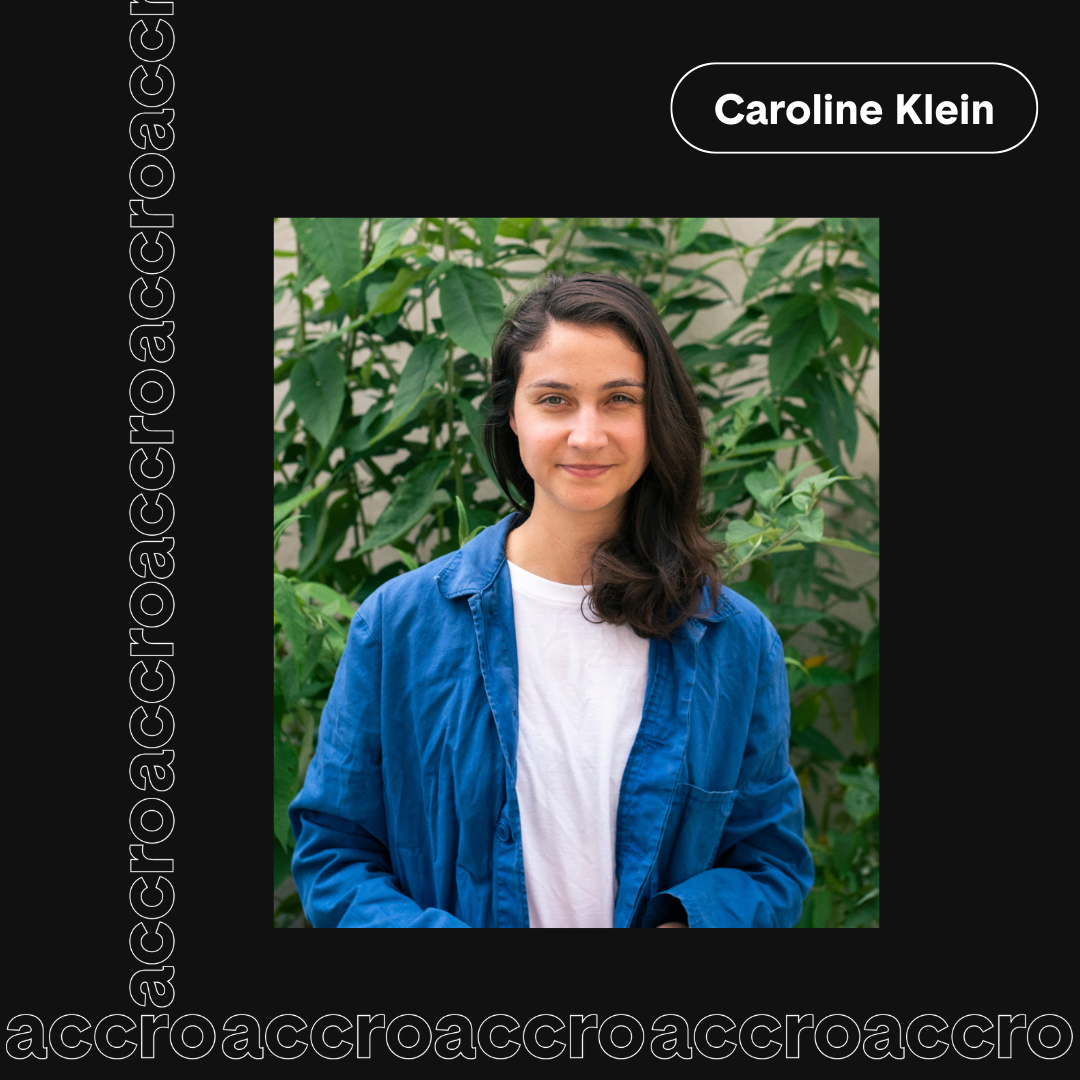
An architect turned joiner, Caroline Klein tells the story of how Gris Bois began and of the book Du pin sur la planche.
24 June 2024
Introduce yourself and your project
My name is Caroline Klein and I am an architect. After graduating in Strasbourg, I worked for three years in an architecture firm. Although those three years were rewarding, I chose to stop because I did not identify with the values being upheld. I really wanted to bring my personal values, mainly environmental ones, into my work. So I then refocused on joinery and bespoke work. This allows me to draw my own plans and reconnect with the human side that smaller-scale projects make possible.
The Gris Bois project was created in 2019 and was linked to setting up the place where we are now, the CRIC. Our main guiding principle has always been to build only with panels derived from solid wood, such as plywood or blockboard, which are very different from fibreboard. We think carefully about our relationship with materials, objects and craftsmanship. Our relationship with objects changes over time. In the past, buying a piece of furniture marked a big occasion and came at a cost. Today that relationship has changed, so it is important to highlight the bonds we have with wood and with craftsmanship. The collaboration with Éditions 2024 came about naturally; being close by made it easier to meet the challenge of writing a book in less than a year. Du pin sur la planche is a choose-your-own-adventure book, which means the reader is in charge of the story. More than thirty stories intertwine depending on the choices made. We wanted to tackle serious subjects, such as the fibreboard and particleboard industry, the diversity of our forests and the environmental challenges they face, craftsmanship, and sexism in a field still dominated by men, all with a light touch.
We wanted to talk simply about materials and about the interior and exterior landscapes around us. To show that industrialisation also plays a major role in how we perceive our monoculture forests, which today are up against tree plantations. We want to show that in the furniture industry the connection is being lost, and that this is changing our interior environments, with homes becoming uniform, and our exterior ones, with our forests.
When you were a child, what did you dream of becoming?
I never really had an obsession with a particular job as a child, but I always knew I wanted to work with people. At one point I wanted to become a doctor, but I quickly realised it would not suit me. In the end, what I like most about architecture is its sociological side. It is a very varied field that can offer a great deal.
What were the difficult moments you had to overcome?
The beginning of Gris Bois was hard, because we were embarking on a new adventure, so anything could happen. And I think that at the start of any project, whatever it is, you need to be both motivated and afraid. The unknown is always a little frightening, but when the first requests came in, it reassured us a lot. Projects then followed one another quickly; we did not see the time go by, we were really in production mode before we found our working rhythm. Our trades demand a great deal of energy and stamina, so it was essential to question the way we worked. When Timothée, a journeyman joiner (compagnon), joined the team, his know-how helped us complement our self-taught side. At the start of the project there were three of us, then two, and I am now solely responsible for running it. Launching a project calls for many sacrifices in terms of time and pay. These are factors that come into play when partners leave a project. The first five years are always complicated, but things are much better now.
Your beginner’s mistake?
Looking back, there were moments of doubt when the values the company stood for at the outset were hard to put into practice, mainly regarding the materials used. To stay competitive, you have to stay within a certain price range. And like many other craftspeople, keeping to those prices means paying yourself less, making smaller margins and taking more risks. At times, these values made us question whether our company was viable. I still ask myself the question, because the market means that every decision ends up being weighed against different factors. When purchasing power falls and raw material prices rise, you find yourself caught up in your values without knowing how to make them concrete. The doubt is always there.
The achievement you are proudest of?
That would be hard to answer; I am always very happy when people take delivery of their furniture. Usually they are pleased, and it is very rewarding to see what we have designed come to life and be so appreciated by our clients. We are always surprised to see what we are capable of. I remember one of our first projects: we visited an attic where two little girls slept. They did not have their own room, and the parents had only asked us to build two desks. As the discussions went on, we took the liberty of redesigning everything from A to Z to create two bedrooms with beds, storage, desks, partition walls and so on. It was a wonderful moment, because the parents had thought a project on that scale would be impossible. But in the end, their two daughters each had their own room.
One piece of advice for those who want to get started?
First of all, I would say that above all you need to trust yourself and try to surround yourself with people who do too, and who can remind you of it in times of doubt. Creative energy lies dormant within us, but we also find it in others. Writing down your goals and motivations so you can remember them is also very important, because we tend to focus on problems that do not represent the project as a whole. So it is important to remember what really matters. When you start out, you tend to accept everything, but you should always move towards the projects that drive you. Learning to say no is vital, because accepting one project leads straight to the next. So you need to make good choices and trust your intuition. Finally, as a woman, you must always keep in mind that we are strong and capable of achieving great things.