In their footsteps: Philippe Riehling
An exclusive interview with Philippe Riehling, Tango&Scan winner and founder of the SECU-RAT project
19 June 2023
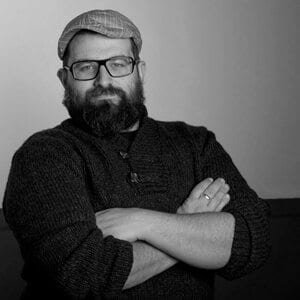
Introduce yourself and your project:
My name is Philippe Riehling and I am a designer specialising in eco-design. Alongside this, I have also been an associate senior lecturer at the Faculty of Arts of the University of Strasbourg for 12 years. I work as a designer as an employee-entrepreneur and partner of the Artenréel cooperative, which I am keen to point out. The project I am going to talk about today is called SECU-RAT, formerly Hamelin. SECU-RAT is a control solution for managing rat populations in urban areas. The project grew out of a meeting between four people: Julien Hoffmann, a naturalist; Sineu Graff, a street furniture manufacturer; Mickael Sage, a researcher specialising in rodents; and, of course, myself. It was a discussion about the growing problem of rats in cities that started the project.
Rats have become more and more present and more and more visible. Solutions have emerged, such as rat-proof litter bins, but they require replacing everything, they produce waste and they generate extra costs. Starting from these observations, we came up with a “base” that clips onto any litter bin. Inside, there is a detection system, mechanical trapping and, as a last resort, a chemical agent, although we try to avoid this as much as possible. We thought carefully about targeting only rats while excluding non-target species, which can be a weakness of competing products. The project is still developing new solutions; we are currently working on V3, which will have to fit dual-stream bins.
When you were a child, what did you dream of becoming?
I wanted to become an illustrator and/or a carpenter. As a child I was always drawing, and both my grandfathers were carpenters. I spent a large part of my holidays with one of them, who built roof frames in his yard; he would draw his full-scale layout and I would wander through his timber structures. Then I got into Meccano and DIY, taking apart everything that broke down at my parents’ house: washing machine, tools, bike… I really wanted to understand how things worked. One day someone told me that being a designer meant conceiving things and making them real, and I understood that this was what I wanted to do.
What is the craziest or most unconventional idea you have put into practice in your project?
When you work with naturalists and academics, the aim is not to have crazy ideas. They gave me very tangible data, such as “if there is too much light, the rat won’t go there…” or “if there is a break in the ground surface, the rat won’t feel safe…”. My job was to translate this information and bring it to life. It is quite a serious public health issue, with no room for crazy ideas.
And did it work?
Yes, it worked, because SECU-RAT has become a company, a patent has been filed, we have just signed orders with several cities and we are in the process of recruiting our future sales director.
Your beginner’s mistake?
I would rather talk about another project, one that did not work: Biome, another Tango&Scan award-winning project. It was a terracotta planter and nesting box developed with a tile and brick works. We missed the mark in the sense that we underestimated the fact that they made tiles and bricks, not planters. We struggled to arrive at a viable project. We did not know the partner and the technique well enough. These things happen sometimes.
The achievement you are proudest of?
The achievement we are proudest of is the scientific poster presented at the International Conference on Urban Pests in Barcelona in 2022. It brought scientific research and the search for solutions through design full circle in the best possible way: it is very rewarding.
One piece of advice for those who want to get started?
As a young designer, making lamps and chairs is over! You have to move on to something else. You have to tell yourself that what lies ahead, such as climate change, must not leave you paralysed in a corner but must be a source of progress. You have to believe in others and trust them, not hesitate to share your ideas and, above all, not close the hatches: you have to open up and try to find solutions together.
Transcribed from the spoken interview.