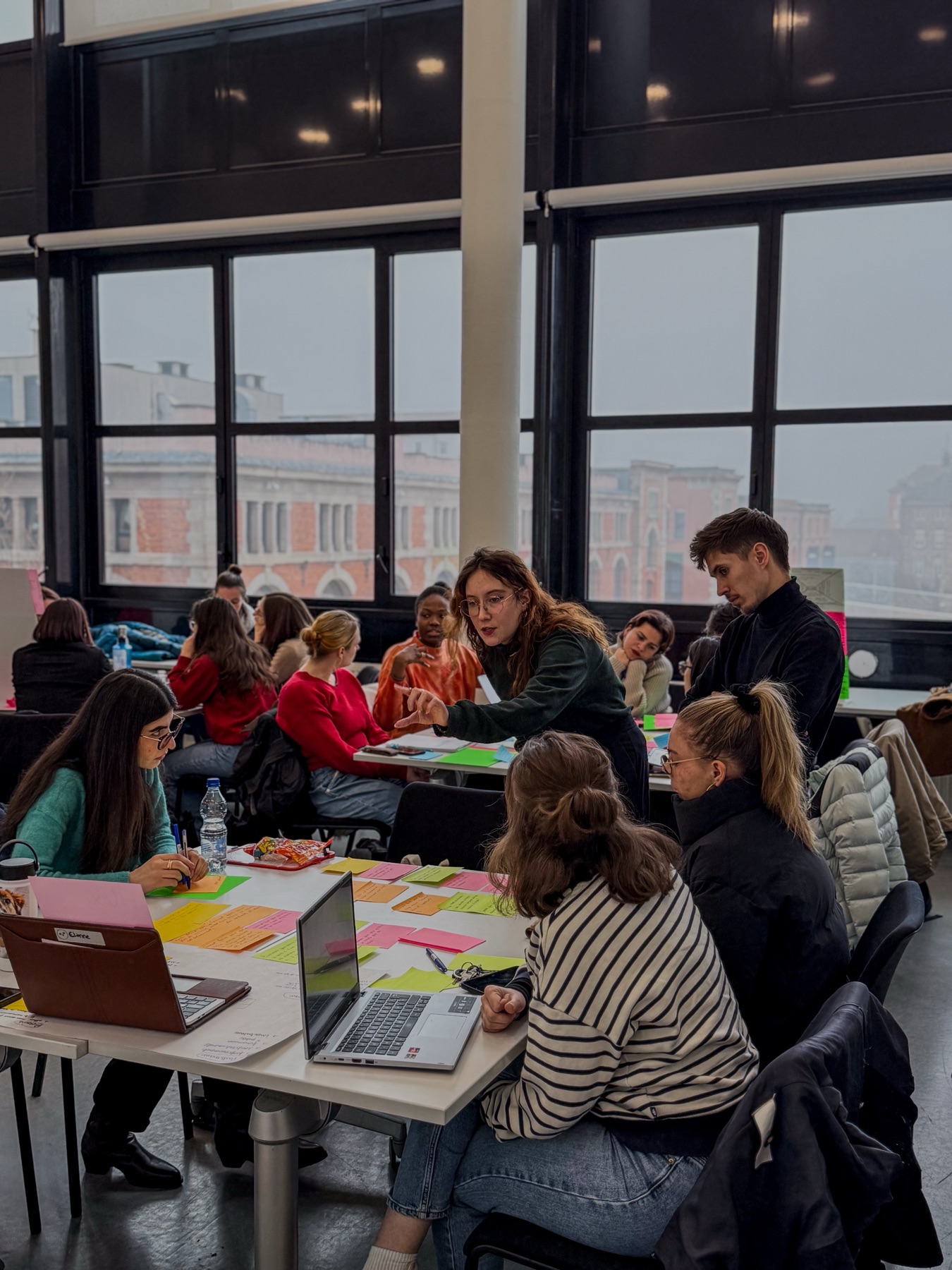
The last module in this learning path, and by no means the least important: putting it all down on paper. An application follows rules that recur from one scheme to the next, from a local call such as Tango&Scan to a European funding programme. We go through the documents to gather, the timeline to stick to, and the mistakes that get an application rejected before it is even assessed on its merits.
What an application must prove
An application answers four questions, always in the same order.
- Who is leading the project, and whether that organisation or person is eligible for the scheme.
- What the project is, precisely, not just the general intention.
- How much it costs, and how it is funded.
- Why this project fits the criteria of the scheme applied for, and not another one.
The last question is the one most often forgotten, which is a shame because it changes everything. The same project can be presented differently depending on whether it is applying for funding that values innovation, employment or cross-border cooperation. Tailoring how you present the project to the scheme in question is not cheating: it shows that you have understood what the funder is really trying to support. Do your homework before you start writing.
The documents that almost always come up
The exact list varies from one scheme to another, but a common core comes up in the vast majority of CCI applications. Tick them off as you go.
- Proof of the applicant’s identityThe organisation’s articles of association, a SIREN or SIRET extract (French business registration), or an identity document for an individual. An application submitted under a legal structure that is still being set up often requires an additional document: check this with the funding body beforehand.
- The project descriptionA presentation text, sometimes with a set template, sometimes free-form. This is exactly where the pitch structure applies: problem, solution, proof, model, team. Reuse what you have already prepared.
- The project budgetSeparate from the organisation’s financial forecast, it details the expenditure and income specific to the funded activity. Check that the two tables remain consistent: an assessor always cross-checks them.
- The project funding planThe list of funders approached and secured, with their share. Most schemes require the amount requested to stay within a ceiling, often 50% of the total cost, sometimes more for a first project or a specific audience.
- Bank details (RIB)In the exact name of the applying organisation or person. A silly detail that holds up a payment happens more often than you might think.
- Letters of support or intentWhen the scheme encourages or requires a partnership, a co-production or a residency.
- A CV or team presentationEspecially expected when the scheme funds a person rather than a project as such, as with an individual grant.
Before you start writing
accro’s directory of grants and funding specifies, scheme by scheme, the submission platform and the documents specifically required. Check it before you start, not afterwards.
The countdown timeline
Here is the most reliable way never to miss a deadline, the one we teach in all our workshops: start from the submission date and work backwards, day by day.
- Submission dayNever aim for the closing day itself. Platforms get very busy in the final hours, and a missing document discovered at the last minute leaves no time to put it right.
- One to two weeks beforeA complete first draft of the application, reviewed by someone outside the project. Not the night before: a proper, unhurried review.
- Two to three weeks beforeFinalise the budget and gather the administrative documents, which nearly always take longer than expected: up-to-date bank details, a recent SIRET extract (proof of business registration), a letter of support from a partner who does not reply straight away.
For schemes that accept applications on a rolling basis or several times a year, as many loan and support schemes do, there is less urgency, but the same rigour applies: an application rushed through is generally treated less favourably than a complete one submitted a round later.
The de minimis rule: something to know before you apply
Many public grants paid to businesses fall under the European “de minimis” rule, which caps the total state aid received by a single company at €300,000 over three financial years, since the ceiling was raised on 1 January 2024.
In practice: a company that has already received several grants over the last three financial years must check how much headroom it has left before applying for new aid covered by this rule. The application generally requires a sworn statement of de minimis aid already received; prepare it in advance rather than improvising it at the moment of submission.
Good to know
This ceiling does not apply to everything. Individual grants paid to artist-authors, for example, generally fall outside this rule. If in doubt, each entry in the grants directory specifies its applicable regime, or you can ask the funding body directly.
Writing an application people read to the end
An assessor or panel member reads dozens of applications in the same period. A dense text, with no subheadings or formatting, discourages careful reading before it has even been assessed on its merits. Make their life easier and they will return the favour.
Use headings and short paragraphs. Answer each question on the form precisely, rather than copying in a generic text that does not quite fit. Give concrete figures rather than vague wording: not “a wide audience”, but an estimated number and how you arrived at it.
Have the application reviewed by someone who does not know the project in detail. It is often the best way to spot passages that seem crystal clear to you but remain obscure to an outside reader, which is exactly the situation of a panel member on a Monday morning with fifteen applications to get through.
European applications: a step up
European schemes (Erasmus+, Creative Europe, cross-border Interreg funds) generally require more work than local schemes: a formal partnership with one or more organisations in another country, co-funding already partly secured at the time of submission, and a denser administrative form, often in English.
Two differences to plan for
Building the partnership takes time, sometimes several months, and must start well before you write the application. And most European calls require part of the funding to be confirmed before submission, which means securing a first local or regional funder beforehand.
Intermediary organisations exist to help with this kind of application, in particular Relais Culture Europe for Creative Europe, or Europe Direct Strasbourg for initial guidance. The grants directory lists these contact points in its European section: do not go it alone.
The mistakes that sink an application
- Applying without meeting an eligibility criterionLegal status, location, type of expenditure. Check this first, before investing a single hour in writing.
- A budget that does not balanceTotal expenditure must match total income, including the funding requested. Any inconsistency, however minor, stands out immediately during assessment and undermines the credibility of the rest of the application.
- A project too vague to be assessedA panel must be able to picture concretely what will be produced, with whom and by when. A worthy but imprecise intention is never enough.
- An application sent with missing documentsIn the hope of completing it later. Some schemes allow you to make up the gaps, but many reject an incomplete application outright at closing. Do not take the risk.
- Ignoring the specific questions on the formIn favour of a generic presentation written for another purpose. An assessor who cannot find the answer to their question will not go looking for it in the rest of the text.
What comes next
A well-prepared application builds on the earlier steps of the learning path: a clear business model, translated into a realistic financial forecast, then told in a pitch that often accompanies the written application. The modules echo one another, and that is no accident.
accro holds drop-in sessions while the Tango&Scan call is open to help with applications, and offers one-to-one sessions for any other scheme. An outside review before submission often makes all the difference between an application that is selected and one that is turned down.